Stability over happiness
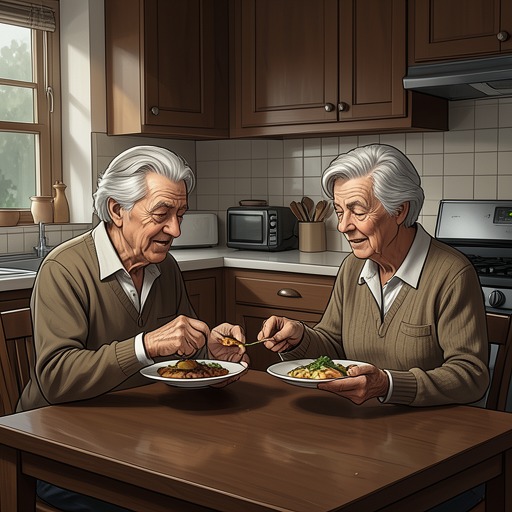
Love in the Time of CholeraStability over happiness is the marital principle Fermina Daza comes to understand only after Juvenal Urbino’s death. What she had once heard as an unbearable judgment becomes, in widowhood, an explanation for how a marriage full of conflict could still contain years of happiness.
The Saying in the Marriage
During a moment of acute distress, Fermina told Juvenal that he did not understand how unhappy she was. He removed his eyeglasses, looked at her with his childlike eyes, and answered that the most important thing in a good marriage was not happiness but stability. At the time, she took the statement as a miserable threat. Its bluntness seemed to subordinate her immediate unhappiness to the preservation of the marriage.
The phrase distinguishes passing emotional satisfaction from the continuity of shared life. It does not deny that unhappiness exists: Juvenal’s answer comes in response to Fermina’s explicit complaint. Instead, it proposes that a marriage may endure through discontent and that endurance itself can make room for happiness across time.
Widowhood and Reinterpretation
In her first year as a widow, Fermina’s memory of Juvenal changed. He ceased to be an obstacle in her daily actions and private thoughts and became a presence that guided without hindering her. She could recall him as a living person while no longer having to contend with his whims, patriarchal demands, or insistence on receiving love through habitual kisses and tender words. From this altered distance, she better understood his yearning for security, which he lacked even in his public life.
That understanding transformed the old saying. Fermina no longer heard it as a threat; she recognized it as the lodestone that had given both of them many happy hours. The insight does not erase the marriage’s unhappiness or recast it as uncomplicated fulfillment. It lets stability and difficulty stand together: the same relationship that brought misunderstandings and anger also sustained a shared life whose value became clearer after it ended.
The Principle Tested in Memory
Later, aboard the riverboat with Florentino Ariza, Fermina held his hand and spoke of her dead husband in the present tense. She stopped smoking rather than release the hand, and reflected that she could not imagine a better husband, though recollection of their life brought back more difficulties than pleasures: mutual misunderstandings, useless arguments, and unresolved anger. She wondered aloud whether two people could be happy for so many years amid such trouble without knowing whether what they had was love.
Her reflection gives the principle its mature, unsettled force. Stability is not proof that a marriage was free of suffering, nor does it settle the question of whether the feeling within it was love. It names the durable life formed through repeated conflict and shared time. In the final contrast between remembered difficulties and years of happiness, Fermina does not choose one account over the other; she recognizes that both belong to the marriage.